
Follow-up falls through the cracks: fixing intake before automating it
Enquiries arrive on WhatsApp, email, forms and phone with no single owner. Why the fix is a shared queue rather than a chatbot, and what we build first.

Part of AI for owner-led service businesses: what to automate, what to keep human
Ask an owner how many open enquiries the business has right now. If the answer takes more than ten seconds, the problem is not follow-up speed. It is that no single place knows what exists.
This is the most common workflow failure we see, and the most expensive, because the cost is entirely invisible. A slow reply produces a complaint. A missed enquiry produces nothing at all — no signal, no angry email, just a customer who went somewhere else and a business that never learned it happened.
Why it happens, structurally
Enquiries arrive on channels that were adopted one at a time, each for a good reason:
| Channel | Who watches it | What happens at 7pm |
|---|---|---|
| Web form → email | Whoever checks that inbox | Nothing until morning |
| One person's personal phone | Depends who is awake | |
| Phone | Reception, during hours | Voicemail nobody plays |
| Instagram / social | Marketing, sometimes | Often days |
Each channel has an owner. The set of channels has no owner. So "did we follow up with that lead from Tuesday?" is genuinely unanswerable, and the honest answer becomes "probably".
Adding a chatbot to this does not fix it. It adds a fifth channel.
The wrong first move
The instinct is to automate replies — put an AI on WhatsApp so nobody waits. We have been asked for this many times and we generally push back, for one reason: if you cannot currently see the queue, you also cannot see what the bot got wrong. You have added speed and removed the only feedback loop you had.
There is also a subtler problem. Automating replies on the busiest channel makes that channel more attractive to customers, so volume shifts toward the one place a human is no longer reading.
What we build first
One queue, every channel, one owner per item. Unglamorous and boring, and it changes behaviour within a week.
Concretely:
- Converge the channels. Every enquiry lands as a row in one place, tagged with its source. WhatsApp, form, email, call log. No channel keeps its own private memory.
- Force an owner. Every item has a named person, assigned automatically on arrival by round-robin, category, or whoever is on shift. Unassigned is not a valid state.
- Make ageing visible. An item that has not been touched in N hours changes colour. This single feature does more than any AI in the system, because "nothing is overdue" becomes checkable at a glance.
- Then add the AI: classify urgency and category on arrival, draft a first reply for the owner to approve, summarise long threads so whoever picks it up does not read forty messages.
Note the order. AI enters at step 4, and the first three steps are what make step 4 safe — because now you can see what it did.
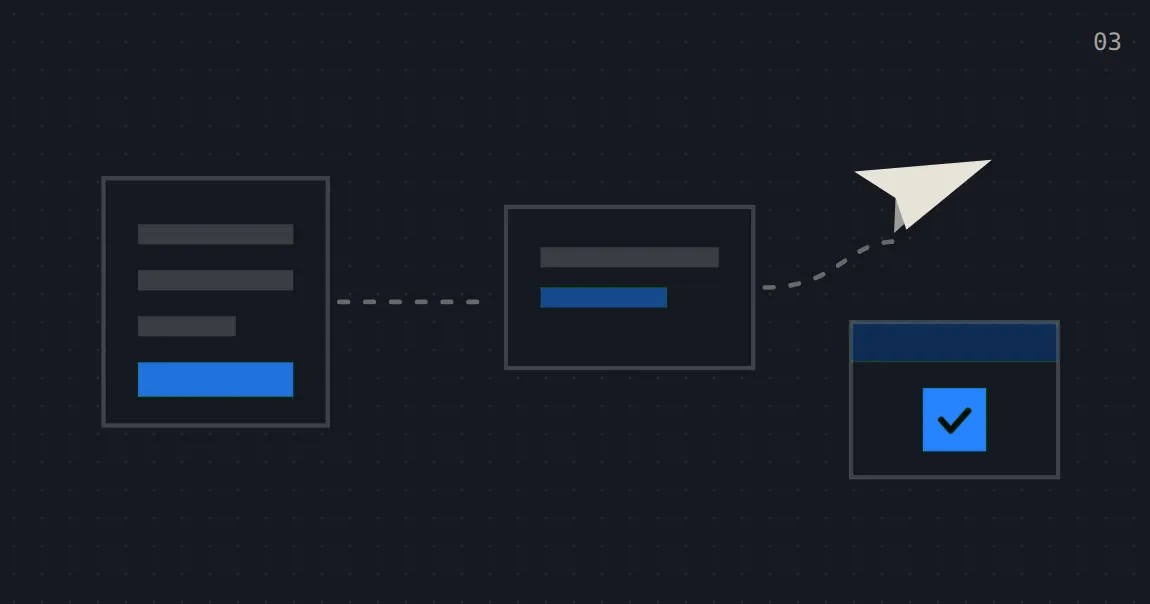
One queue, every channel, an owner on every item — the unglamorous part that makes the AI safe to add.
Where AI genuinely helps here
Once the queue exists, these are worth automating and carry little downside:
- Classification on arrival. Urgency, service type, likely value. Wrong guesses are visible and cheap to correct.
- Draft replies for approval. The owner edits and sends. Most of the time saving with none of the exposure.
- Thread summarisation. Especially valuable when an enquiry has bounced between two people.
- Follow-up prompts. "This has been quiet four days, do you want to nudge?" Suggesting the task rather than performing it.
What we do not automate: the send. On a customer-facing reply, a person presses the button. That is a deliberate design position, covered in approvals that stall the work.
What this looks like built
The Luma case study is this workflow — lead follow-up with owner visibility and a clear handoff — and ClientPilot AI covers the intake-and-response side with customer messaging and a citation trail. Both document the architecture and the decisions, including what we would do differently.
For phone specifically, where the enquiry arrives as a call and nobody is free to answer, the pattern is different enough to warrant its own note: voice intake that hands off to a human.
Honest limits
- A queue does not create capacity. If four people cannot handle the volume, a dashboard showing that clearly is useful but it is not a fix.
- Channel convergence needs discipline for a fortnight. People go back to their personal WhatsApp. It works if the owner uses the queue in front of the team; it fails quietly if not.
- Classification accuracy plateaus. Expect useful, not perfect. Design so that a miscategorised item is a minor annoyance rather than a lost enquiry.
How to tell if this is your problem
Three questions. If you cannot answer any of them in under a minute, this is the workflow to fix first:
- How many open enquiries exist right now?
- Which is the oldest one nobody has replied to?
- Who owns it?
← Back to AI for owner-led service businesses